Top 5 Benefits of Using Cotton Packaging Bags for Your Business
On this page
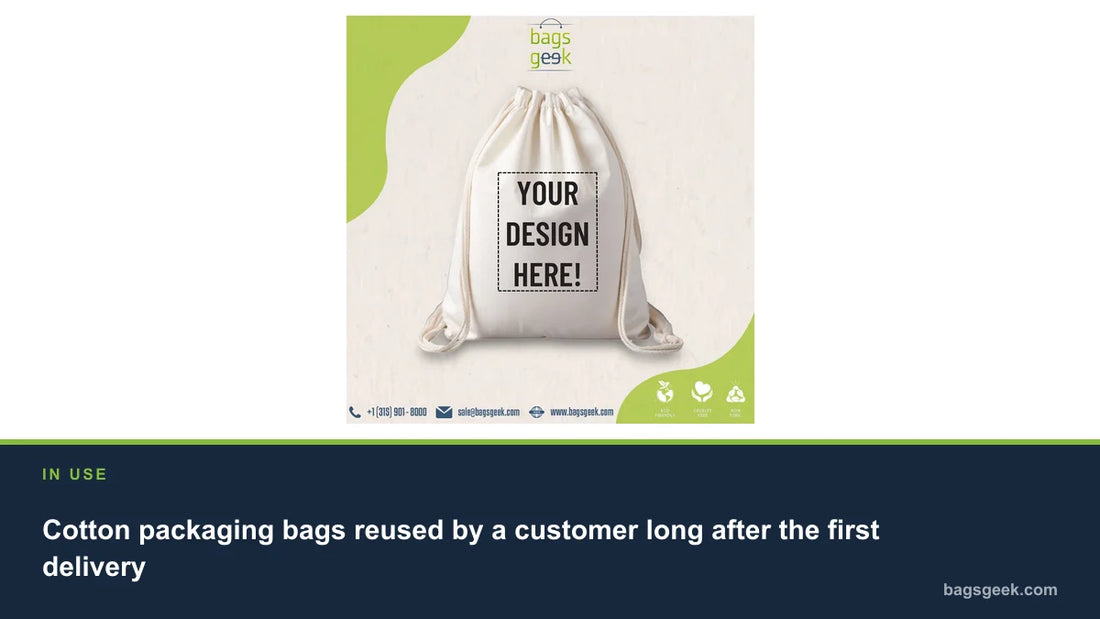
The strongest argument for cotton packaging is not environmental — it is that customers keep it. Every other packaging material you buy is thrown away within minutes of the product being opened. A cotton bag stays in the customer's home, and if your name is on it, so does your brand.

1. Cost per impression, not cost per unit
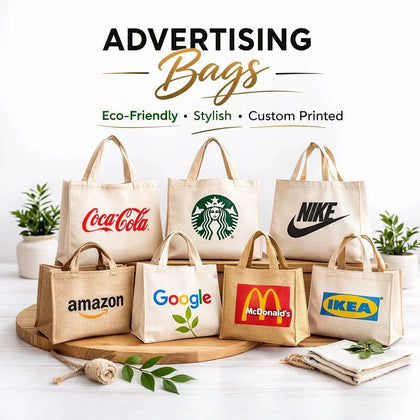
Compare properly. A printed carton or poly mailer is seen once, by one person, then recycled. A cotton bag with a restrained logo gets reused for storage, travel or the gym — dozens of outings, some of them in public.
Divide the delivered cost by realistic uses and cotton lands below almost any paid channel. The catch is that the maths only works if the bag is good enough to keep and restrained enough to carry. A thin bag covered in branding returns nothing.
2. It protects better than it looks like it should
- Breathability. Coffee degasses, bread keeps its crust, soap keeps curing, produce does not sweat, leather does not grow mould. Sealed plastic causes all of those failures.
- Surface protection. Soft cotton will not scratch metal, glass or polished finishes — which is what actually damages jewellery and candles in transit.
- Separation. Items in individual bags do not rub, chip or transfer dye against each other in a box.
Where it is not enough: anything needing a genuine moisture or oxygen barrier. Cotton breathes, which is a feature in most cases and a liability in a few. Use a sealed inner with a cotton outer where shelf life matters.
3. Plastic regulation is moving one way
Single-use plastic carriers are restricted or charged for in a growing number of markets, and retailers increasingly require documented alternatives from suppliers before listing a product.
Switching is often revenue-neutral: the charge that used to go on a plastic bag goes on a cotton one customers are willing to pay for and keep. That is a different position from absorbing a cost.
4. It signals what your product is
Packaging is read before the product is. A cotton bag reads as small-batch, considered and worth protecting; a poly bag reads as commodity. For anything positioned as handmade, premium or food-craft, the packaging either supports that positioning or quietly undermines it.
This is also why restraint matters. A plain natural bag with a small mark says more than a heavily branded one.
5. It removes a step for the customer
Nobody enjoys dealing with packaging. A cotton bag needs no unwrapping, no tape, no flattening for recycling — it opens with a pull and then has an obvious next use. For subscription and repeat-purchase brands that small friction reduction compounds over many deliveries.
6. The environmental case — conditional, not automatic
Worth stating honestly, because overclaiming here is a liability. Cotton is water-intensive to grow and a cotton bag has a higher production footprint than a single paper or plastic bag.
What changes the picture is lifespan. A bag used dozens of times amortises that footprint across every use; a single-use item carries its whole footprint in one outing. So the environmental argument holds when the bag is genuinely reused and fails when it is not.
Practically that means: specify a bag people want to keep, keep the branding restrained, and if you make sustainability claims in your own marketing, get the certification to back them. See what GOTS organic cotton means.
What switching actually costs
More per unit than plastic, less than a rigid box. The variables are quantity, bag size, fabric weight and print colours — quantity dominating, because screen setup is fixed and spreads across the run.
Blank bags have no printing minimum and ship from stock; printed runs start at 100 pieces with price steps at 500, 1,000 and 5,000. Full mechanics in how much custom printed cotton bags cost.
Where to start
Order a small run in the size you actually need, use it for one product line, and see whether customers mention it. That is a cheaper test than a strategy document, and it tells you whether the reuse assumption holds for your customers specifically.
Ordering
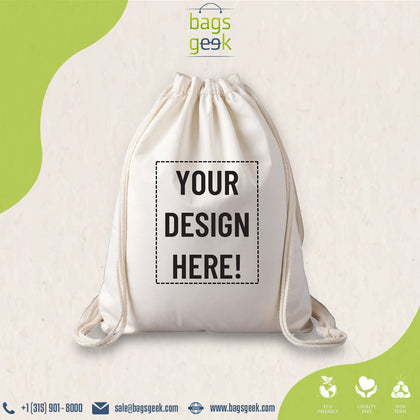
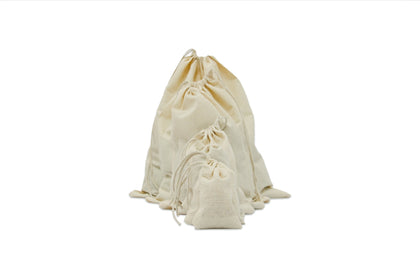
Browse the cotton drawstring bag range, muslin bags or cotton tote bags. For branded runs from 100 pieces, custom drawstring bags with your logo or the wider custom range. Sizing help in the cotton bag size guide.
Frequently asked questions
Why use cotton packaging instead of plastic?
Because customers keep it. Plastic is discarded within minutes; a cotton bag gets reused for storage or travel, so a branded bag keeps circulating. It also protects better for anything needing airflow — coffee, bread, soap, produce, leather.
Are cotton bags actually more sustainable?
Conditionally. Cotton has a higher production footprint than a single paper or plastic bag, but amortises it across dozens of uses. The case holds when the bag is genuinely reused and fails if it is discarded after one outing — which is an argument for specifying a bag people want to keep.
Is cotton packaging expensive?
More per unit than plastic, less than a rigid box. Quantity drives the price most, because screen setup is fixed and spreads across the run. Blank bags have no printing minimum; printed runs start at 100 pieces.
When is cotton the wrong choice?
When you need a genuine moisture or oxygen barrier — long retail shelf life on ground coffee, for instance, or anything that could leak. Cotton breathes, which is the point in most applications and a liability in those. Use a sealed inner with a cotton outer.
How do I start without over-committing?
Order a small run in the size you actually need and use it for one product line. That tests whether the reuse assumption holds for your customers far more cheaply than committing across the whole range.
Testing cotton packaging?
Blank stock ships in 24-48 hours; printed runs from 100 pieces. Send your size and quantity.
Shop the rangeAdd your logo