How to Choose Cotton Bags for Coffee Packaging
On this page
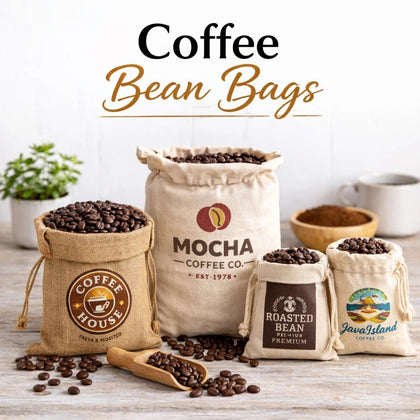
Freshly roasted coffee releases carbon dioxide for days, so it must not be sealed airtight immediately — and that is exactly what a breathable cotton bag handles well. Where cotton alone is not enough is long shelf life, because the same airflow that lets CO2 out lets oxygen in. Knowing which of those two problems you have decides the whole specification.

The degassing problem
Roasted beans off-gas CO2 for roughly two weeks, most heavily in the first few days. Sealed in a rigid airtight container the pressure builds; sealed in a plastic bag without a valve it swells and can split.
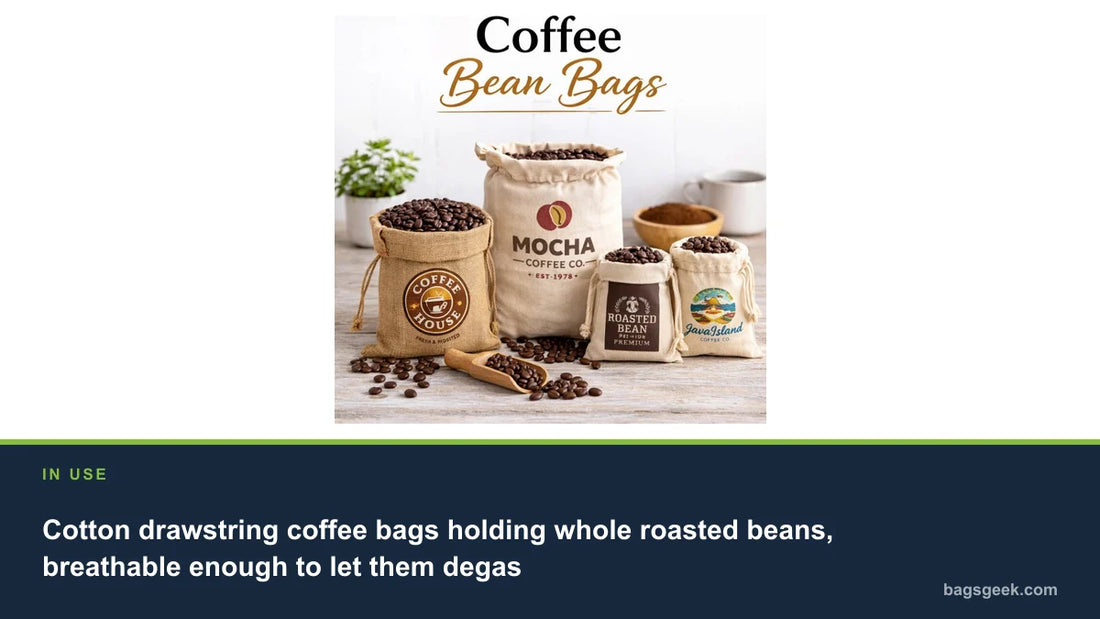
Cotton solves this without hardware. The weave lets CO2 escape continuously, which is why beans sold direct from a roastery within days of roasting sit perfectly well in a cotton bag.
Where cotton alone is not enough
Oxygen is what stales coffee, and a breathable bag does not exclude it. For beans that need weeks or months of shelf life — retail listings, wholesale supply, anything sitting on a shelf — use a sealed inner with a cotton outer.
That combination is standard for a reason: the barrier does the preservation, the cotton does the presentation and gets kept. Grinding makes this more urgent, because ground coffee has far more surface area and stales in days rather than weeks.
Sizing by weight
| Bag size | Whole bean | Use |
|---|---|---|
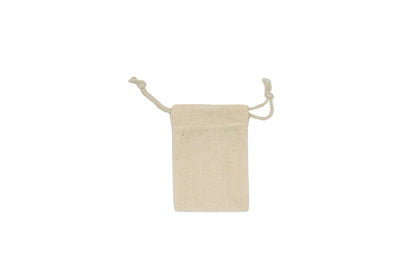
| 4 x 6 in | Around 100g | Samples, tasting sets, subscription trials |
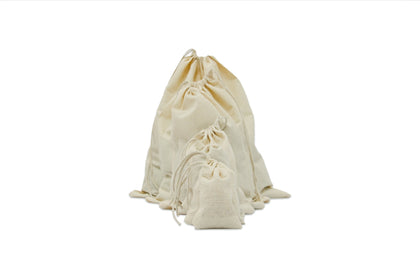
| 6 x 8 in | Around 250g | The standard retail size |
| 6 x 10 in | Around 340g (12oz) | US retail standard |
| 8 x 10 in | Around 500g | Larger retail, cafe supply |
| 10 x 12 in | Around 1kg | Wholesale, cafe bulk |
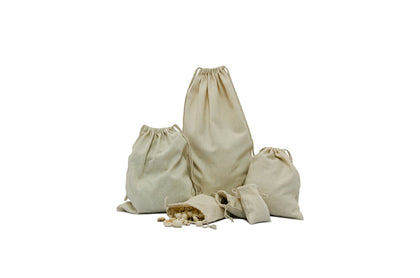
Fill to about three quarters. Beans need room to settle, and a bag packed to the top will not gather at the cord.
What roasters should specify
- 145 GSM cotton or muslin. Muslin for maximum airflow on very fresh beans; 145 GSM where the bag should be opaque and hold a crisper print.
- GOTS organic, AZO-free. Ask for the certification specifically rather than a general "natural" claim — this is food contact.
- Double drawstring above 8x10. Larger openings do not close evenly on a single cord.
- Unbleached natural. Cheaper, hides the inevitable coffee-oil marks better than white, and suits the craft positioning most roasteries want.
Why customers keep them
This is the commercial argument. A foil bag is opened, emptied and binned. A cotton bag with a roastery's mark on it becomes a storage bag, a lunch bag, a travel pouch — and every time it is used the brand is visible in the customer's kitchen.
For a subscription roastery that is a recurring impression at effectively no extra cost after the first purchase. Keep the branding restrained; a bag covered in logo does not get reused.
Cold brew
Worth mentioning because it is the other big coffee use. A muslin bag holds coarse grounds, cinches shut, steeps in the jug for 12–18 hours and lifts straight out — no decanting, no filtering. A 6x8 or 8x10 bag suits a standard jug. See muslin bags vs cheesecloth.
Care
Coffee oils stain cotton and the smell lingers — both cosmetic. Rinse in cold water, wash without detergent where possible so residue does not transfer flavour, and air dry fully before storing. A damp bag stored away will develop mould.
Ordering
See cotton drawstring coffee bean bags, or the size range directly: 6x8, 6x10 and 8x10 cotton drawstring bags. For branded runs from 100 pieces, custom drawstring bags with your logo. Related: cotton bags for tea packaging.
Frequently asked questions
Are cotton bags good for coffee?
For freshly roasted whole beans, yes — the weave lets CO2 escape during degassing without the bag swelling or splitting. For longer shelf life, use a sealed inner inside the cotton bag, because breathable fabric does not keep oxygen out.
What size cotton bag for 250g of coffee?
6 x 8 inches, which is the standard retail size. 6 x 10 takes about 340g (12oz), 8 x 10 around 500g, and 10 x 12 around 1kg. Fill to roughly three quarters so the drawstring closes cleanly.
Will coffee go stale in a cotton bag?
Faster than in a barrier bag, because oxygen passes through the weave. That is fine for beans sold and drunk within a couple of weeks. For retail shelf life, or for ground coffee, use a sealed inner with the cotton bag as the outer.
Is cotton food safe for coffee?
GOTS certified organic, AZO-free cotton is — no azo dyes, no pesticide residues. Ask for the certification specifically rather than relying on a general claim that the fabric is natural. Wash before first use.
Can cotton coffee bags be reused?
Yes, and that is much of the point — a branded bag keeps appearing in the customer's kitchen. Rinse cold, wash without detergent where possible, and air dry fully. Expect oil staining and lingering aroma, both cosmetic.
Packaging coffee in cotton?
Send your weight per bag and quantity. We will recommend a size and quote it, usually within one working day.
Coffee bagsAdd your logo