Reusable Cotton Produce Bags: Benefits, Tare Weight & How to Use Them
On this page
Most fruit and vegetables spoil because they are wet, not because they are exposed. Sealed plastic traps the moisture produce naturally gives off, which is what turns salad leaves to slime and sprouts mould on berries. Cotton lets that moisture leave, and for most produce that alone extends usable life by days.

What tare weight means
Tare is the weight of the empty bag. Because produce is sold by weight, a reusable bag has to be deducted or you pay for the fabric.
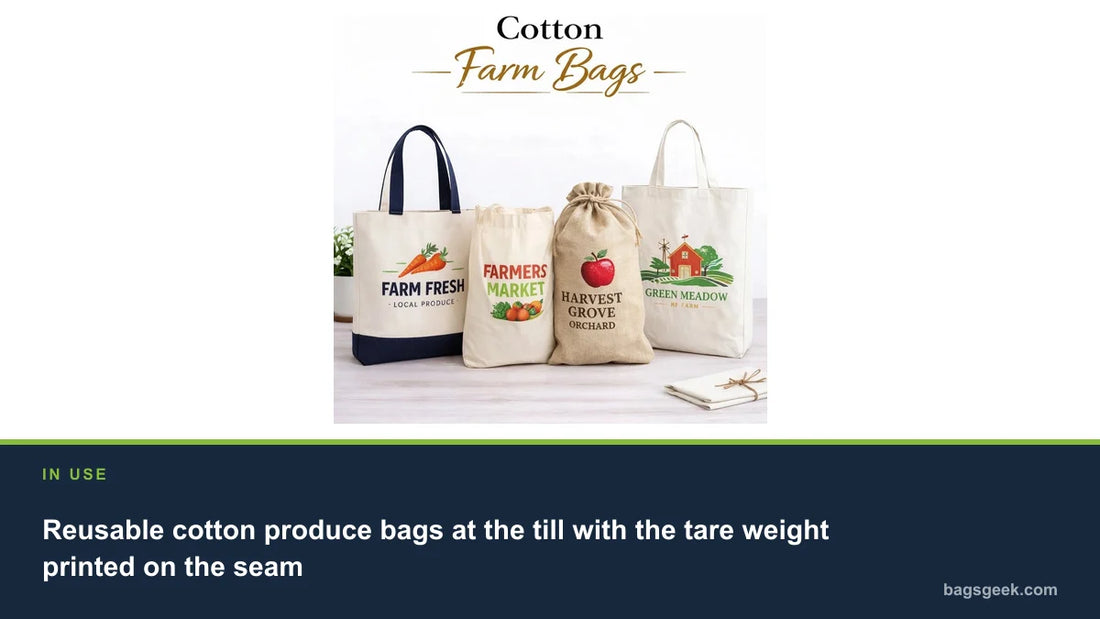
In practice: the cashier either weighs the empty bag first and subtracts it, or reads a printed tare from the bag and enters it. Some scales have a tare function built in. Printing the tare on the seam is what turns a nice idea into something that works at a busy till without holding up the queue.
The weights are small — a few grams for a small bag — but across a full shop it adds up, and more importantly it removes any argument at the checkout.
Which produce benefits most
| Produce | Cotton vs plastic |
|---|---|
| Leafy greens, herbs | Much better — plastic causes slime within days |
| Root vegetables, onions, garlic | Much better — plastic causes sprouting and rot |
| Apples, citrus, stone fruit | Better — less mould |
| Berries | Better, but refrigerate and use quickly regardless |
| Mushrooms | Much better — the classic case; plastic makes them slimy |
| Cut or pre-washed produce | Worse — needs a sealed container |
Two honest exceptions. Anything already cut, washed or trimmed needs a sealed container, because the protective skin is gone. And produce you want to keep humid — some leafy herbs, for instance — does better in a damp cloth inside a container than in a dry bag alone.
Sizes
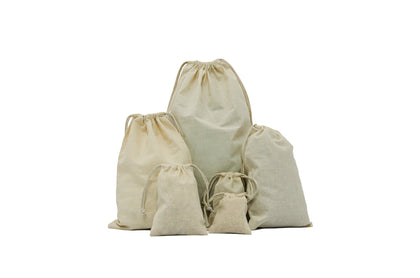
- 6 x 8 in — herbs, chillies, mushrooms, a couple of lemons
- 8 x 10 in — apples, onions, peppers, a bunch of carrots
- 10 x 12 in — potatoes, larger vegetables, salad for the week
- 12 x 16 in — bulk root veg, a whole cabbage, market hauls
A practical set is two or three of each of the middle sizes. Fill to about three quarters so air can move around the contents.
Muslin or standard cotton?
Muslin for maximum airflow — the best choice for mushrooms, herbs and greens, and light enough that tare weight is negligible.
145 GSM cotton for anything heavy or with sharp edges: potatoes, root vegetables, hard squash. It carries the weight without stretching and survives repeated washing better.
Care and hygiene
- Wash between uses if the bag held soil-covered produce; a rinse and dry is fine otherwise.
- Cold wash, no fabric softener — softener coats the fibres and reduces breathability, which is the whole point.
- Air dry fully before storing. A damp bag in a drawer develops mould, which then transfers to produce.
- Keep produce bags separate from bags used for anything non-food.
- Expect staining from beetroot, berries and turmeric. Cosmetic only.
Storing at home
The bag does not stop at the shop. Onions, garlic, potatoes and squash keep for months in a cotton bag in a cool dark cupboard — far longer than in plastic, which sprouts them. Keep potatoes and onions in separate bags, because onions accelerate potato sprouting.
For the fridge, a cotton bag in the crisper drawer works well for greens and herbs; the drawer supplies the humidity and the bag stops condensation pooling.
For shops and markets
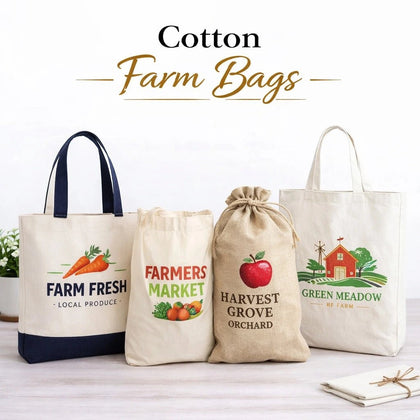
Retailers selling reusable produce bags at the till get the same benefit as with totes: a branded bag that returns every week. Print the tare weight on the seam, keep the branding to one colour, and size around what you actually sell. See cotton tote bags for retail for the wider case.
Ordering
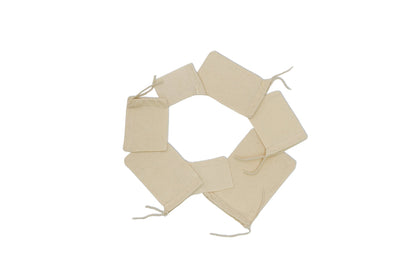
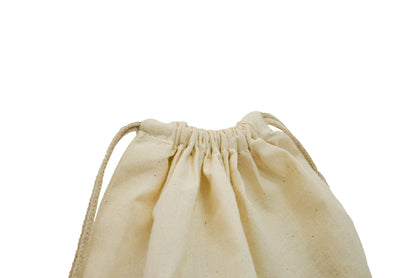
See 6x8, 8x10, 10x12 and 12x16 cotton drawstring bags, or browse muslin bags for the lightest option. All GOTS certified organic and AZO-free. Branded runs from 100 pieces: custom drawstring bags with your logo.
Frequently asked questions
Do cotton produce bags really keep vegetables fresher?
For most produce, yes — spoilage is usually driven by trapped moisture rather than air exposure. Cotton lets that moisture escape, which noticeably extends the life of greens, mushrooms, roots and herbs. Cut or pre-washed produce is the exception and needs a sealed container.
What is tare weight and why does it matter?
Tare is the weight of the empty bag. Since produce is sold by weight, it has to be deducted or you pay for the fabric. Printing the tare on the seam lets a cashier enter it instantly instead of weighing the bag separately.
What size produce bags should I buy?
A practical set is two or three each of 8x10 and 10x12, plus a 6x8 for herbs and mushrooms and a 12x16 for bulk root vegetables. Fill to about three quarters so air can move around the contents.
How do I wash produce bags?
Cold wash without fabric softener — softener coats the fibres and reduces breathability. Air dry completely before storing, since a damp bag develops mould that then transfers to produce.
Can I store vegetables in cotton bags at home?
Yes, and it is one of the better uses. Onions, garlic, potatoes and squash keep for months in a cotton bag in a cool dark cupboard. Keep potatoes and onions in separate bags, since onions accelerate potato sprouting.
Buying produce bags in quantity?
GOTS certified organic cotton, blank from stock in 24-48 hours. Tare weight can be printed on the seam.
Shop the rangeBulk pricing