Muslin Bags for Gardening: Seed Saving, Drying Herbs & Bulb Storage
On this page
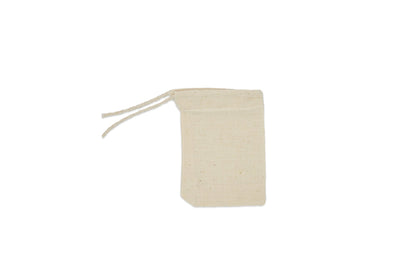
Seed, herbs and bulbs all fail the same way in storage: trapped moisture. Seed loses viability, herbs go mouldy, bulbs rot. A muslin bag solves all three at once by letting moisture equalise with the air while keeping the contents contained and labelled — which is why it is the one piece of kit that turns up in every part of the gardening year.

Seed saving
Seed needs to be fully dry before storage and needs to stay dry. Sealed in plastic, any residual moisture condenses on the first cold night and either sprouts the seed or rots it — and you will not know until nothing germinates in spring.
Dry seed on a tray first, then store in a muslin bag somewhere cool and dark. Write the variety and year directly on the bag or on a tag; unlabelled seed is effectively lost seed.
2x3 or 3x4 bags suit most vegetable and flower seed. Bigger seed — beans, peas, squash — wants 4x6 or 6x8.
Drying herbs
Tie a bunch, slip a muslin bag over it and hang it upside down in a dry, airy spot. The bag keeps dust and insects off, catches leaves as they drop, and — crucially — still lets air circulate, which a paper or plastic bag does not.
Once dry, strip the leaves and store them in the same bag. Whole leaves keep their oils far better than crushed, so wait until you actually use them before crumbling.
4x6 or 6x8 for a small bunch; 10x12 or larger for a harvest.
Bulbs, garlic and onions over winter
This is where the difference is most dramatic. Bulbs and alliums stored in plastic sweat and rot within weeks; in a breathable bag hung in a cool shed or garage they keep for months.
- Cure them first — lift, then dry for a couple of weeks before bagging.
- Hang the bag rather than resting it on a shelf, so air reaches all sides.
- Keep onions and potatoes in separate bags; onions accelerate potato sprouting.
- Check periodically and remove anything soft before it spreads.
8x10 to 12x16 depending on quantity.
Protecting fruit on the plant
Slipping a muslin bag over a developing bunch of grapes, a fig or a ripening apple protects it from birds, wasps and fruit fly while still letting sun and air through. Netting keeps birds off but not insects; a bag does both.
The trade-off is a very slight reduction in light, which is negligible on most fruit. Use 6x8 for single fruits and 8x10 or larger for bunches, and tie the drawstring loosely around the stem.
Other uses through the year
- Compost tea — fill with compost or manure and steep in a bucket, then lift the bag out. No straining.
- Sorting and drying tubers — dahlia tubers overwinter well in muslin with a little dry compost.
- Collecting on the plot — small bags for pods and seedheads as you walk round, labelled as you go.
- Cuttings and propagation — a bag over a rooting cutting keeps humidity up without the total seal that rots stems.
Sizes at a glance
| Size | Use |
|---|---|
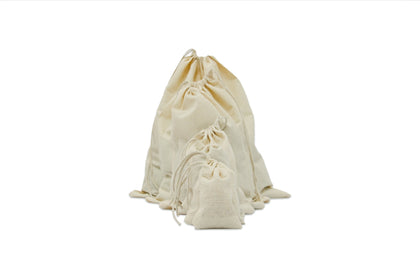
| 2 x 3 – 3 x 4 in | Saved seed, small quantities |
| 4 x 6 in | Large seed, small herb bunches, single fruits |
| 6 x 8 in | Herb bunches, fruit bunches, garlic |
| 8 x 10 – 10 x 12 in | Bulbs, onions, harvested herbs |
| 12 x 16 in+ | Bulk alliums, compost tea, produce |
Care
Shake out debris after each season and wash cold without fabric softener — softener coats the fibres and reduces the breathability the whole thing depends on. Air dry fully before storing; a damp bag put away will develop mould that transfers to next year's seed.
Our cotton is GOTS certified organic and AZO-free, which matters if bags touch anything edible. See what GOTS organic cotton means.
Ordering
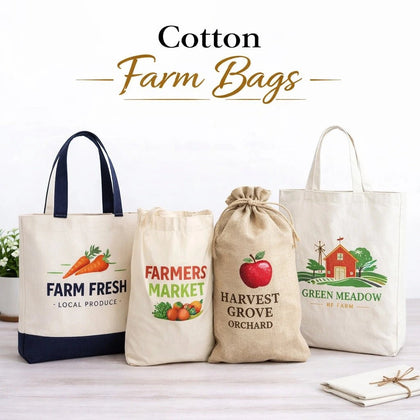
See cotton drawstring seed bags, or the size range: 3x4, 6x8 and 10x12 cotton drawstring bags. Browse all cotton muslin bags. For heavier harvest and storage use, cotton farm bags.
Frequently asked questions
Why store seed in muslin rather than paper envelopes or plastic?
Plastic traps residual moisture, which condenses on cold nights and either sprouts or rots the seed. Muslin lets moisture equalise with the air, and unlike paper it does not soften or tear if it gets slightly damp. Dry seed fully before bagging either way.
How do I dry herbs in a muslin bag?
Tie a bunch, slip the bag over it, and hang upside down somewhere dry and airy. The bag keeps dust and insects off and catches falling leaves while still letting air circulate. Store the dried leaves whole in the same bag.
Can I store garlic and onions in cotton bags?
Yes, and they keep for months that way. Cure them for a couple of weeks after lifting, then hang the bag rather than shelving it so air reaches all sides. Keep onions and potatoes in separate bags, since onions accelerate potato sprouting.
Do muslin bags protect fruit from pests?
Yes — a bag over a developing fruit or bunch keeps birds, wasps and fruit fly off while still letting sun and air through. Netting stops birds but not insects, which is why a bag works better on grapes and figs.
How do I wash garden bags?
Shake out debris, wash cold without fabric softener — softener coats the fibres and reduces breathability — and air dry fully. A damp bag stored away develops mould that transfers to next season's seed.
Stocking up for the season?
GOTS certified organic cotton, blank from stock in 24-48 hours with free US shipping.
Seed bagsAll muslin bags